11. How to create premium dinner party ambiance
When hosting, focus on details that alter the mood—dim lighting, curated music, and real cloth napkins—rather than spending a fortune on expensive catering.
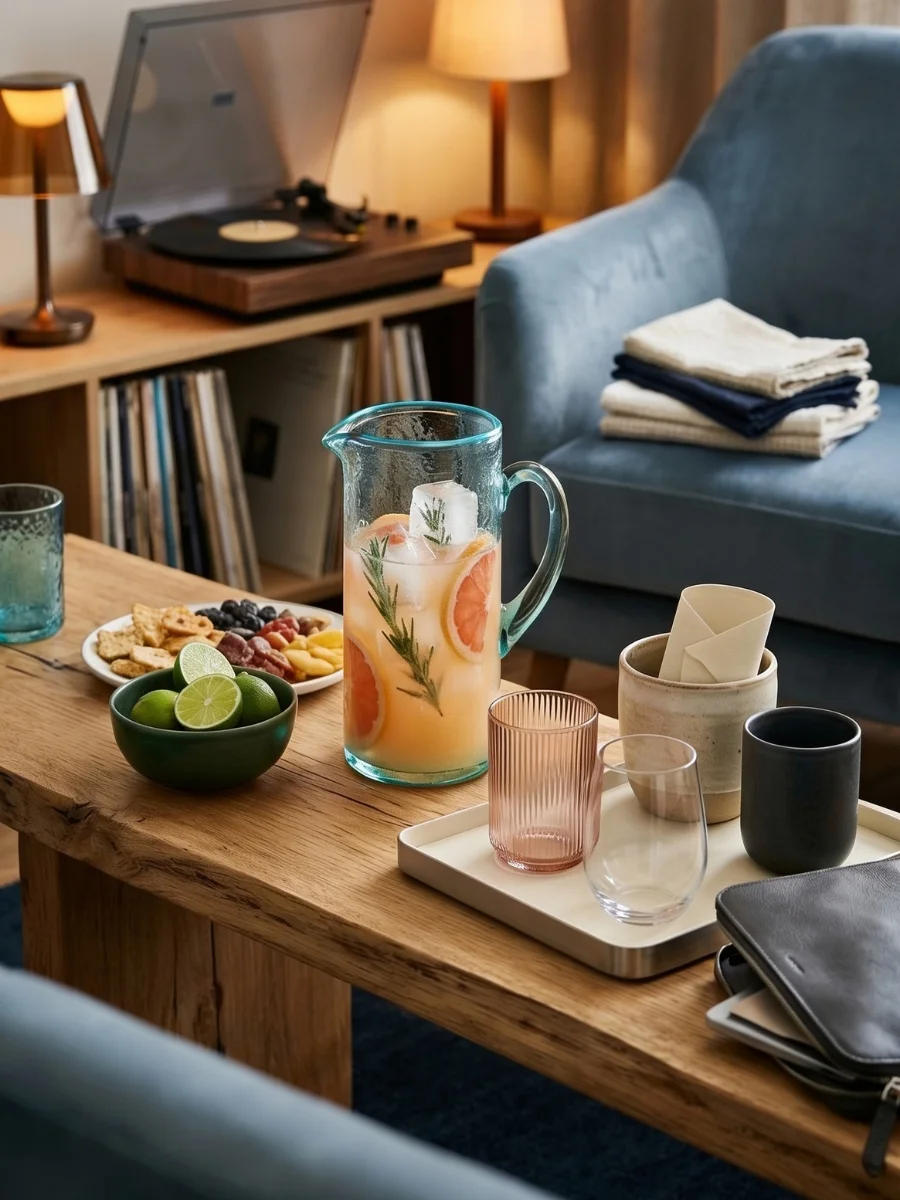
Lighting sets the baseline. Instead of using a standard overhead light, you can scatter a few amber-tinted rechargeable cordless lamps across your bookshelves or place a single pillar candle inside an empty fireplace to give the room a different depth.
You can also swap a generic background playlist for a vinyl record player spinning vintage bossa nova, change paper towels in the bathroom for rolled waffle-weave cotton hand cloths, or freeze whole sprigs of rosemary into large clear ice blocks for water carafes.
Setting up a self-serve drink station on a side table lets people mix their own drinks whenever they want.
This simple setup keeps you from running around acting like a waiter, so you can actually sit down and hang out with your guests.
If you want to see how these lighting and placement strategies apply to the rest of your home, you can look through my separate breakdown on
affordable luxury interior design rules to see how to create a warm, balanced atmosphere.
12. Service industry respect and tipping manners
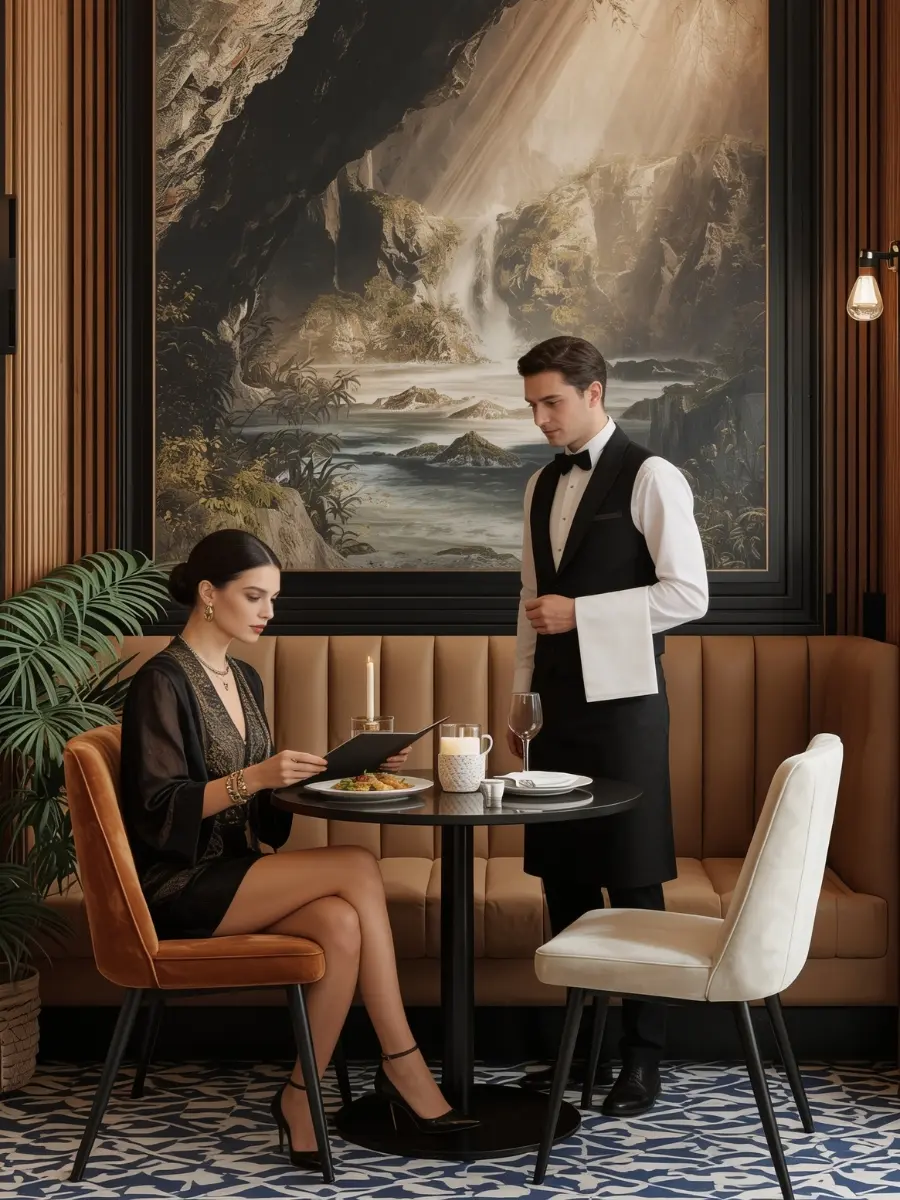
Being rude to waiters, hotel clerks, or valets is uncultured. Sophisticated people treat service workers with respect, use first names, and keep their tone warm.
When an order is wrong or a room isn’t ready, staying calm gets faster results.
Talk to the person like a colleague solving a problem. It is practical to remember that staff control the quality of your experience.
A polite request can secure a better table or an unprompted upgrade. Greeting the valet before you drop the keys in their hand changes the mood of the interaction.
13. Mindful Spending: How to Balance Time Management and Savings
Spending half your afternoon driving across town or hunting down promo codes online just to save ten dollars on a bottle of wine is a bad deal.
Comfort is about having a frictionless day where you don’t need to force yourself through minor hassles to protect a tiny margin.
It is an expensive habit to trade high-value mental energy for low-value financial returns.
If you analyze the math on every interaction, you let money dictate your schedule.
A few weeks ago I caught myself refreshing an app for twenty minutes trying to find a cheaper ride share home instead of just paying the prime-time rate. It left me standing in the cold over a difference of four dollars.
Pay the local rate, keep your afternoon moving, and use that time to actually rest.
Related Reading: A major part of sophisticated hosting is choosing tactile, welcoming materials for your space. Discover how to create an elegant, inviting atmosphere with our 7 Essentials for French Linen Home Design.
14. No phone boundaries at dinner tables
Take one quick photo of your nice meal or hotel view, then tuck the phone away.
Keeping your phone on the table face-up signals that the people in front of you do not have your full attention. Screen time while dining has become as socially unacceptable as lighting up a cigarette indoors.
High-end spaces are leaning into presence, which means the luxury is being unreachable.
If you must check something urgent, walk away from the table. Why do we treat a vibrating pocket like a life-or-death situation when we are trying to have a nice dinner? Leaving your device in a bag or coat pocket prevents the impulse to scroll.
Modern Travel Etiquette & Lounge Rules
Flying or taking a train has turned into a headache. Packed terminals, full cabins, and digital screens demanding extra money at checkout make it easy to start a trip feeling defensive.
It is exhausting. Getting to your destination smoothly comes down to avoiding unnecessary friction. Modern etiquette focuses entirely on managing crowded shared spaces without losing your temper, which means knowing exactly how to handle busy airport lounges, navigating high-pressure payment tablets quietly, and keeping your luggage compact. Nobody wants drama. Taking the pressure off yourself and the people around you is the only way the journey stays easy for everyone.
15. How to get free upgrades politely
Hotel clerks, flight attendants, and restaurant staff hold a surprising amount of leeway when handing out perks.
They look for travelers who are calm and decent to deal with, rather than people who show up demanding special treatment.
On a short domestic flight, my overhead bin was full. Instead of making a scene, I was ready to keep my cabin bag under the seat in front of me. Seeing this, the flight attendant moved me to an empty row so I could stretch out.
Last year, I took my dad to a beautiful restaurant with an incredible terrace view.
While ordering, I had some quick, friendly small talk with the waiter and casually mentioned it was my dad’s birthday, with zero intention of getting anything for free.
Later in the evening, the waiter brought over a complimentary cheesecake and a signature birthday drink for my dad. It was a pleasant surprise. Service workers deal with demanding people all day. Giving them a moment of basic politeness is what opens doors.
16. Digital Tipping Etiquette: How to Handle Tablet Checkout Screens
Do not over-tip out of guilt or to look rich, and do not under-tip to save money. Look up the local standard before you travel.
When you buy a coffee or pick up a takeaway order at a counter, pressing the “no tip” button on the digital tablet is completely fine.
Traditional hospitality standards mean reserving your money for the people who actually sit down and serve you.
It is an odd cultural habit to let a software screen guilt us into paying extra for someone simply turning a tablet around or handing us a pre-made pastry.
Last month, I watched someone tip twenty percent on a box of donuts they picked out themselves just because the cashier was staring right at them. It felt forced. If you are sitting down for a full meal, stick to the regional baseline—whether that means a standard percentage in New York or just rounding up the change in Madrid.
Pay exactly what is expected for actual service, skip the digital checkout performance, and keep your focus on the experience
17. Airport lounge behavior and luggage rules
An airport lounge should feel like a relief from the chaotic main terminal. Grab a coffee, sit down, and keep your voice to a normal conversational level. Never play a video or take a phone call on speaker without headphones.
Lounges are crowded now. Spreading your bags across three empty chairs or pacing around while talking business breaks the peace.
If you must pick up a call, duck into a phone booth or step back out toward the hallway. Be a ghost. Keeping your luggage compact and your volume down lets the people around you actually get some work done before boarding.
18. Public space headphone and voice to text rules
I see people wearing earbuds frequently now, since transparency modes let you hear the outside world.
But walking up to a coffee counter or greeting a friend with both buds stuck in your ears is just rude.
It looks like you are half-present. Take them out.
The same thing applies to voice-to-text dictation. Muttering your text messages out loud on a quiet train or in a small café is the exact same thing as using speakerphone. Nobody around you wants to hear the details of your weekend plans or your work drama. If you cannot type it out without noise, wait until you get off the train.
Digital Etiquette Rules
Managing how you appear online used to be simple, but now our phones follow us everywhere.
We have reached a point where digital access feels like a non-stop demand on our focus.
Why do we feel forced to answer a random text inside two seconds while ignoring the live human sitting right across the dinner table?
It makes no sense.
Your digital habits tell people exactly how much control you have over your own life.
Sharing your lifestyle with a taste means knowing when to stay quiet, rather than flashing every single receipt or luxury purchase to a feed full of acquaintances. Manners online come down to drawing hard lines. It means keeping private chats in a vault, choosing when you want to engage, and making sure you don’t turn into a public nuisance by ringing video calls out of nowhere.
19. How to share luxury travel on social media
Share your lifestyle on social media with a taste.
Post a beautiful view or a clean outfit shot, but skip the captions designed to show off.
Oversharing every transaction signals that you are surprised by your own access to nice things. It looks desperate.
If you stay at a nice resort, upload a single photo of the architecture or the evening light rather than a large gallery showing your private pool from five angles. Drop the location tags for exclusive places. Keep people guessing.
Never upload screenshots of your first-class boarding pass, restaurant bills, or designer shopping bags. Waiting until after you check out to post protects your safety and removes the need for immediate validation.
20. Setting professional email response boundaries
Answering every message within two seconds signals that you have nothing better to do.
It looks frantic. Leaving your read receipts turned on or replying to non-urgent business emails at midnight forces you into an artificial race against time.
Set your boundaries. Keep your phone on “Do Not Disturb” during dinner or deep work blocks.
You do not owe the internet an immediate response just because an app sent a notification.
Control means choosing when you engage.
Reply to your friends when you actually have the mental space to chat, and leave the work notes for office hours.
People respect an outline of availability. I put my phone on do not disturb mode after 20:00 two years ago and can affirm the world did not collapse.
21. Social media tagging privacy guidelines
Posting a screenshot of a text exchange on your public story violates the basic trust of a conversation.
Even if the topic is harmless, it forces your friends to second-guess what they text you.
Ask first. Last month, an acquaintance posted a group photo from a private gathering and tagged everyone, which accidentally revealed someone’s location who was trying to keep a low profile that weekend. It caused unnecessary friction.
The same rule applies to tagging people in photos or videos where they might not want their location or appearance broadcasted to your network. A casual dinner conversation shouldn’t turn into public content for your followers.
As a European living in Africa, I constantly deal with people coming up to ask if they can take a photo of me simply because I am white.
I always refuse. They post these images to social media, and as a private person, I don’t like having my day broadcasted to strangers.
I won’t even mention the cases where people took my image without permission and posted it, forcing me to report the post for a privacy violation to get it taken down. Digital manners mean treating your private interactions like a vault, not data for your feed.
22. Public vlogging background privacy rights
I see people filming vlogs or taking photos everywhere now, but catching strangers in your background without them knowing is a violation of privacy. A restaurant or a hotel lobby is a shared space, not your personal backdrop. Before you upload anything to your feed, look closely at the frame. If someone is caught in the background chewing their food, having a private talk, or just trying to walk down the street in peace, it is your job to handle it. Crop them out, blur their face, or just don’t post the clip. People around you are living their actual lives, not serving as props for your feed
23. Unexpected video call etiquette
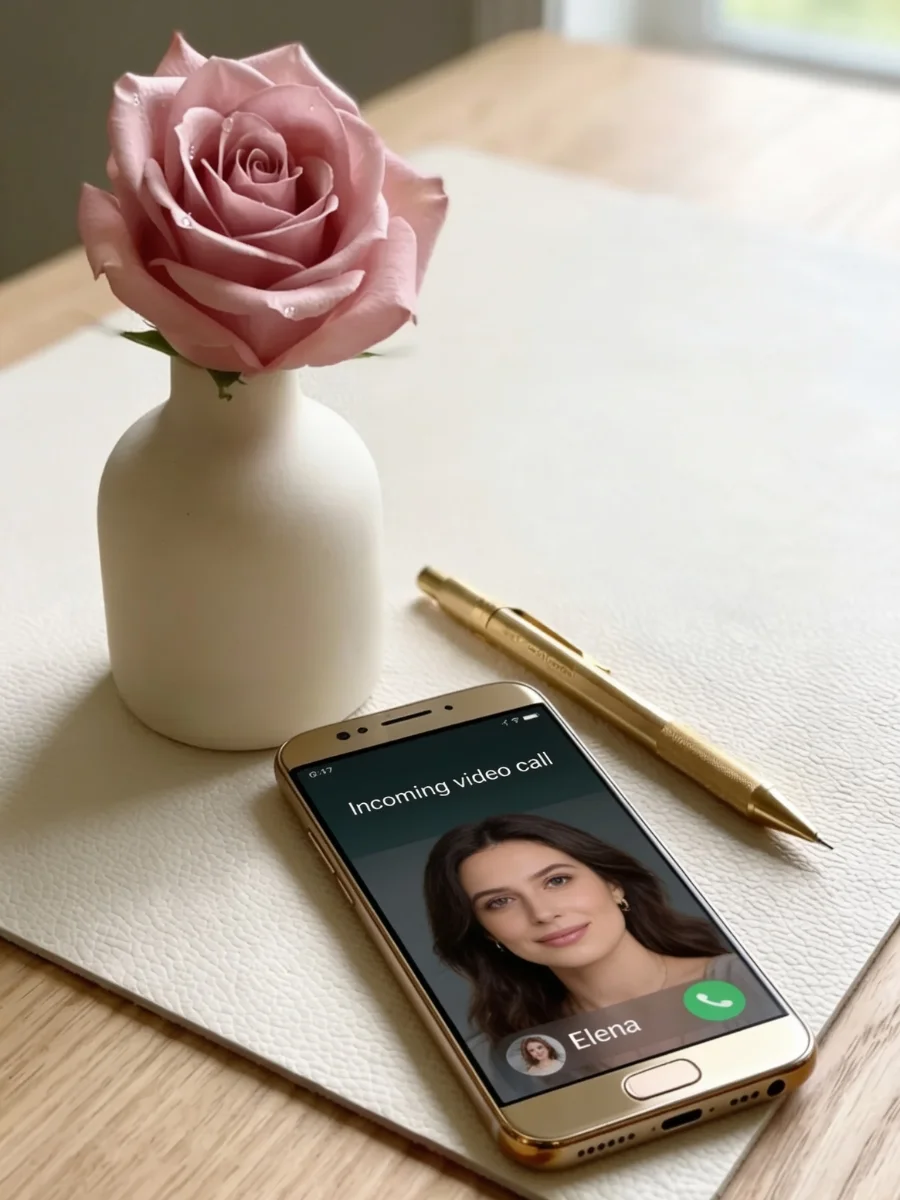
Ringing someone’s phone with an unexpected video call or calling out of nowhere forces them to look or act ready on the spot.
It assumes their immediate environment, clothing, and schedule are wide open for you.
Send a quick text instead. Simply checking if someone has ten minutes to talk before dialing happens prevents awkward disruptions.
The same courtesy applies to standard voice calls when a quick message does the job. Last week, an old acquaintance called me by video call twice on a Sunday afternoon while I was mid-dinner with family, without a single message beforehand. It felt a bit invasive. Respecting someone’s digital space means asking for entry before you try to jump onto their screen.
24. Avoid AI thank you notes
I love efficiency, but using AI to write a thank-you note or a condolence letter is a mistake. It is the modern equivalent of paying a concierge to choose a gift for your friend. If you use a tool to polish your grammar or fix a typo, that is fine. But using it to fake your actual feelings is lazy. It is a breach of trust. People can usually tell when a machine wrote your feelings anyway. If you don’t have time to write a sincere message yourself, then don’t send anything.
Modern Workplace Etiquette
Work is weird now because half the team is at home and the other half is in the office. Today, having good manners there just means two things. First, don’t ignore the person sitting on the Zoom screen just because it’s easier to talk to the colleague right next to you. Second, stop treating work chat like a casual group text with your friends.
25. Hybrid meeting etiquette for remote teams
We’ve all been in those split hybrid meetings where three people are in the physical room and four are on Zoom.
The people in the room always end up dominating the conversation because it’s just easier to talk to someone you can see.
If you’re running the meeting, you have to stop and ask Zoom for input first.
And don’t just say, “Any questions from the remote team?” That never works. Because of the slight audio lag on video calls, by the time a remote person unmutes, someone in the physical room has already started talking and cut them off. It ruins the flow.
It makes the screen team look slow when it’s really just a tech issue.
Call people on the video call out by name before you move to a new topic, and give them a dedicated three seconds of silence to answer. Don’t let the room turn into a private huddle while your coworkers watch on mute.
26. Slack vs email workplace communication boundaries
Slack and WhatsApp make office talk feel like a non-stop group chat with your friends. That makes it dangerous. Sending a quick, casual message on Slack because a random thought popped into your head forces your coworker into an immediate back-and-forth conversation. If it isn’t a burning emergency, use email instead. Email sits there quietly until the other person actually has the time to open it. A chat notification on a phone demands an answer right now. Respecting the difference between a quick chat and a proper email is how you protect your team’s focus.
Smart Spending: How to Buy Investment Pieces
Trends move so fast now that an item can go from viral to embarrassing in less than a month.
Showing status used to mean buying the newest, loudest release the second it dropped, but that habit just fills your home with stuff you don’t even need.
Modern style comes down to knowing what you actually like. Laser-etched smart glasses, raw steel desk accessories, and metallic tech cases lose their appeal fast because they are built around online novelty.
Once you use them, the software glitches or the metal shows every single scratch and fingerprint. Spending money on items you only use once makes no sense. I buy things that survive the seasonal noise because I prefer to keep my setup for years, focusing my budget on the pieces that earn their value through daily wear.
27. How to Avoid Impulse Buying and Algorithmic Shopping Loops
Look at your feed right now and promise yourself you won’t buy that viral item just because it keeps popping up on your timeline.
It is easy to get caught up in the online noise when an algorithm pushes the same aesthetic onto everyone.
Shop for your own needs. Purchasing those asymmetric bouclé accent chairs, transformational teal home accessories, or asymmetric mirrors that look great in a thirty-second clip often ends with a clash against everything you own.
Control your impulse. If you chase every algorithmic shift, you end up with an expensive pile of clutter you do not even care about.
28. How to calculate cost per wear value
Calculate value by usage, not just the upfront price. A three-hundred-dollar wool coat you wear a hundred times over several winters costs three dollars per wear. Compare that to a thirty-dollar fast-fashion top that shrinks in its second wash cycle, leaving you with a fifteen-dollar cost per wear.
Think about shoes. Spending two hundred dollars on leather loafers you wear three times a week for two years breaks down to pennies per use. Buying a silk gown for a friend’s wedding means you spent hundreds of dollars on a single evening. I focus my budget on the pieces that stay on my body week after week.
Which Modern Etiquette Rules Matter Most?
Putting a guide like this together is one thing; living it out is a different challenge.
Tucking my phone out of sight during a meal or ignoring notifications to focus on the person next to me feels natural.
I have never been the type to share my private life or hunt for validation on an Instagram feed.
But I struggle with hosting without overspending. The urge to over-prepare is a tough habit to break.
Last month, I bought three distinct types of high-end gins, tonics, and excessive cheeses for just four guests.
It was a waste that left my counter full of half-empty bottles.
I think my problem in general is overspending, which links back to the cost-per-wear math when making purchases.
This is the hardest rule for me to stick to. It takes changing the mindset to pass up a cheap, immediate alternative when you need an item fast, even if you know the quality piece lasts for years.
What about you? Which of these rules do you find the easiest to follow, and which ones do you struggle with the most?
If you also want to learn about the
habits of quiet luxury, I have made an article about it. You can check it out to learn how to clean up phone clutter, implement a low-information diet, or use the hotel lobby strategy in your daily routine.