Whenever I get dressed for a warm resort getaway, I always look for a flawless back waist gap on high waisted shorts solution because nothing ruins a clean, minimalist silhouette faster than a loose waistband.
Disclosure: This post contains affiliate links. I may earn a small commission at no extra cost to you.
I know this exact fitting room heartbreak all too well.
You find a gorgeous pair of high-rise summer shorts that slide over your hips like an absolute dream.
They fit your thighs beautifully, you feel incredibly confident, and then you turn around to look at the store mirror.
There it is: a massive, two-inch gap of empty air sitting right at your lower spine.
I used to think my own proportions were just strange until I learned how mass-market factories actually cut their clothing panels.
(Honestly, discovering that manufacturing flaw completely changed the way I look at my wardrobe and saved me years of mirror frustration.)
This air pocket is simply a construction flaw born out of cheap, flat manufacturing patterns.
Once you know how to read the fabric lines, you can easily out-smart the retail system while browsing your favorite boutique catalogs.
I want to help you protect your wardrobe from these frustrating, low-quality construction traps.
We can completely bypass this issue by shifting our focus from generic trend shopping to practical, elegant garment layout rules.
By understanding how fabric handles tension around your waist, you will naturally discover how to look expensive on a budget without wasting money on poorly built pieces.
Before we look at the fabric lines together, use these quick directory links below to jump straight to our core styling solutions.
Complete Guide Index: How to Fix the Waist Gap
- Why Sizing Up Fails in the Fitting Room
- Flat Waistbands vs. Contoured Waistbands
- Why Belts Never Fix a Loose Waist Panel
- How to Spot Structural Seams in Catalog Photos
- Front Bulk vs. Hidden Side Zippers
- The Three Elegant Outfit Formulas
Why Sizing Up Fails in the Fitting Room
When I browse a clothing store, I notice that labels are intentionally designed to make us focus entirely on a tag number.
But standard clothing sizes are an illusion because factories operate on rigid, flat averages.
To save money on fabric and speed up assembly lines, fast-fashion brands cut their waistbands as perfectly flat, straight rectangles.
They assume the human torso is shaped like a perfectly straight tin can.
But your body is three-dimensional and curves inward sharply right above the pelvic bone.
Your silhouette arches deeply along your lower spine, meaning your waist naturally demands a soft, cone-like shape rather than a flat box wrapper.
When a flat, straight piece of fabric is forced onto a deeply curved lower back, it cannot bend to follow your skin.
The fabric reacts to the width of your hips by buckling outward at your narrowest point, creating that empty pocket.
The biggest mistake I see women make in the store mirrors is sizing down to choke the waist, which only suffocates the hips.
Or, they size up to clear their thighs, which leaves the top band floating around their ribs like a loose hula-hoop.
You can easily break out of this loop by inspecting the shape of the garment before you ever try it on.
This simple adjustment transforms the way you shop, allowing you to curate high-end outfits that elevate your daily style much like learning how to look expensive in a t-shirt does for your casual looks.
The Quick Visual Diagnostic Check
To help you quickly identify these fitting patterns while scanning through clothing racks or online catalogs, I look for three distinct construction indicators.
This straightforward matrix breaks down exactly how the initial cutting shape of a textile dictates its final real-world look on your silhouette.
| Shopping Signal | Fabric Shape | Fit Reality |
| Mass-Market Cut | Flat Rectangle | Gaps at Back |
| Premium Tailoring | Curved Crescent | Sits Flush |
Professional Secrets for a Perfect Silhouette
When I am hunting for new pieces online, I use a specific test to determine if a garment is worth my time before clicking “buy.”
This indicator helps me instantly weed out flat, industrial patterns that will never sit right on a real human form.
The Flat Hand Test: If you can easily slide your entire flat hand down the back of your waistband while standing straight, the pattern is cut flat. Put it back on the rack; a belt will never truly fix it.
Flat Waistbands vs. Contoured Waistbands
Checking the top construction edge first is the most reliable way to evaluate any clothing line before bringing it home.
Most mass-market retail brands utilize a straight-cut waistband layout to save on overall manufacturing costs.
As established earlier, wrapping a straight rectangle around a three-dimensional torso always creates a massive air pocket.
To achieve a true luxury silhouette, the secret is specifically hunting for clothing built with a contoured waistband.
A contoured waist panel is drafted with a natural curve directly inside the pattern room before the fabrics are ever sewn together.
This smart, curved geometry allows the garment to roll inward seamlessly to echo the waistline profile perfectly.
(I still find it fascinating how a simple curved line on a cutting table can completely alter how an outfit looks in motion.)
The physical difference between these two design layouts becomes immediately obvious when utilizing a simple visual fabric comparison.
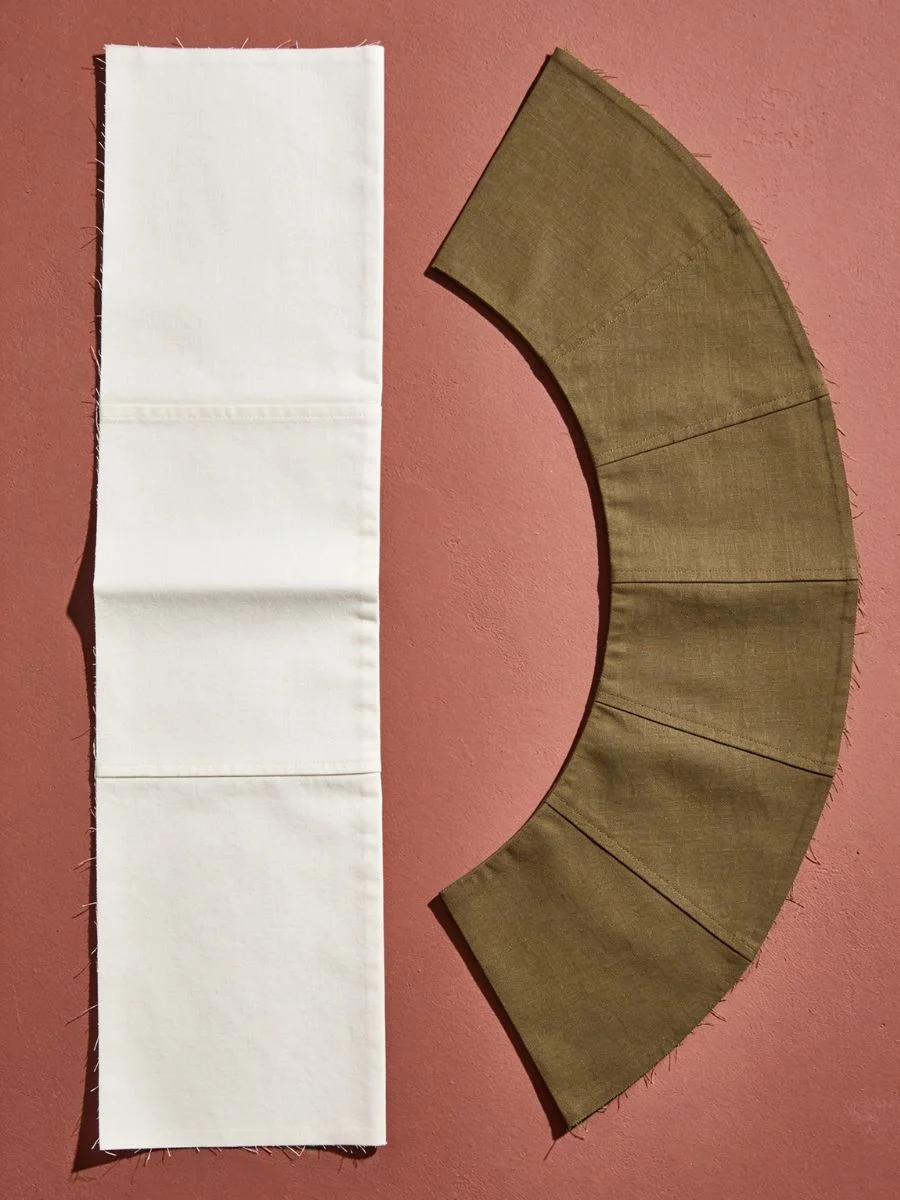
As the technical studio layout above illustrates, the initial shape of the pattern cutout completely controls the final outfit lines.
The white fabric on the left represents the basic rectangle found on mass-produced summer clothing. Because it lacks any pre-shaped curve, it sits on the lower back like a rigid piece of flat cardboard.
Now, look closely at the dark-khaki tan fabric cutout block resting on the right side of the layout. This piece is cut on a distinct, circular crescent-arc shape that builds a natural inward tilt directly into the garment lines.
While you won’t see these raw, separate fabric panels while browsing a boutique rack, you will see their direct engineering results on the finished garment.
When a brand uses that flat white rectangle pattern, the top of the finished shorts will run in a rigid, perfectly straight horizontal box line.
However, when you look at a premium item built from that khaki crescent shape, the top band retains the memory of that curve. It will scoop down gently in a soft wave, tilting inward to hug the lower lumbar region perfectly.
This brilliant structural geometry prevents the fabric from gaping open and keeps a tucked-in shirt neatly in place. It completely eliminates that annoying air pocket, giving the outfit an expensive, custom-made feel.
Reviewing the catalog detail photos to verify that the top band tilts inward gently rather than running perfectly horizontal saves hours of return shipping hassle.
Contoured Waistband Advantages
Understanding why this subtle design change completely transforms how a garment feels during a long day is essential for building a smart wardrobe.
This simple comparison highlights how proper pattern shapes turn a standard clothing item into a highly functional wardrobe piece.
| Technical Component | Everyday Style Benefit |
| Inward Circular Arc | Hugs the spine with zero gaps |
| Three-Dimensional Cut | Stays anchored when you sit |
Premium Wardrobe Insights
In luxury resort lookbooks, the waistline always looks completely seamless and clean against the lower spine.
Achieving this exact high-end look without spending a fortune is easy if you know what to check for on the fabric panels before checkout.
The Clothing Hanger Test: Hold the shorts up by the waistband at eye level. If the top edge forms a perfectly straight horizontal line, it is a flat cut. Look for a waistband that scoops down slightly in a soft crescent wave.
Why Belts Never Fix a Loose Waist Panel
Styling advice online frequently suggests that a loose waistband can be resolved simply by cinching it with a belt, but that shortcut fails on a flat manufacturing pattern.
Hiding a fundamental tailoring mistake behind a heavy accessory does not create an elegant, polished silhouette.
When a rigid leather strap is pulled tight against a straight-cut garment, the adjustment fights directly against basic fabric physics.
The extra material cannot magically disappear; it is forced to react to the mechanical compression.
Because a flat rectangle has too much fabric for a narrow lower back, forced horizontal pressure drives that excess cloth to fold and pucker right over the spine.
(I used to try this all the time back when I thought accessorizing could camouflage poor garment architecture, only to realize I was just creating a bulky silhouette.)
Instead of a clean, sleek, minimalist line, the result is an accidentally clumpy, messy cluster right above the hips.
The visual proof of this common wardrobe malfunction shows up clearly when examining how fabric handles structural tension.
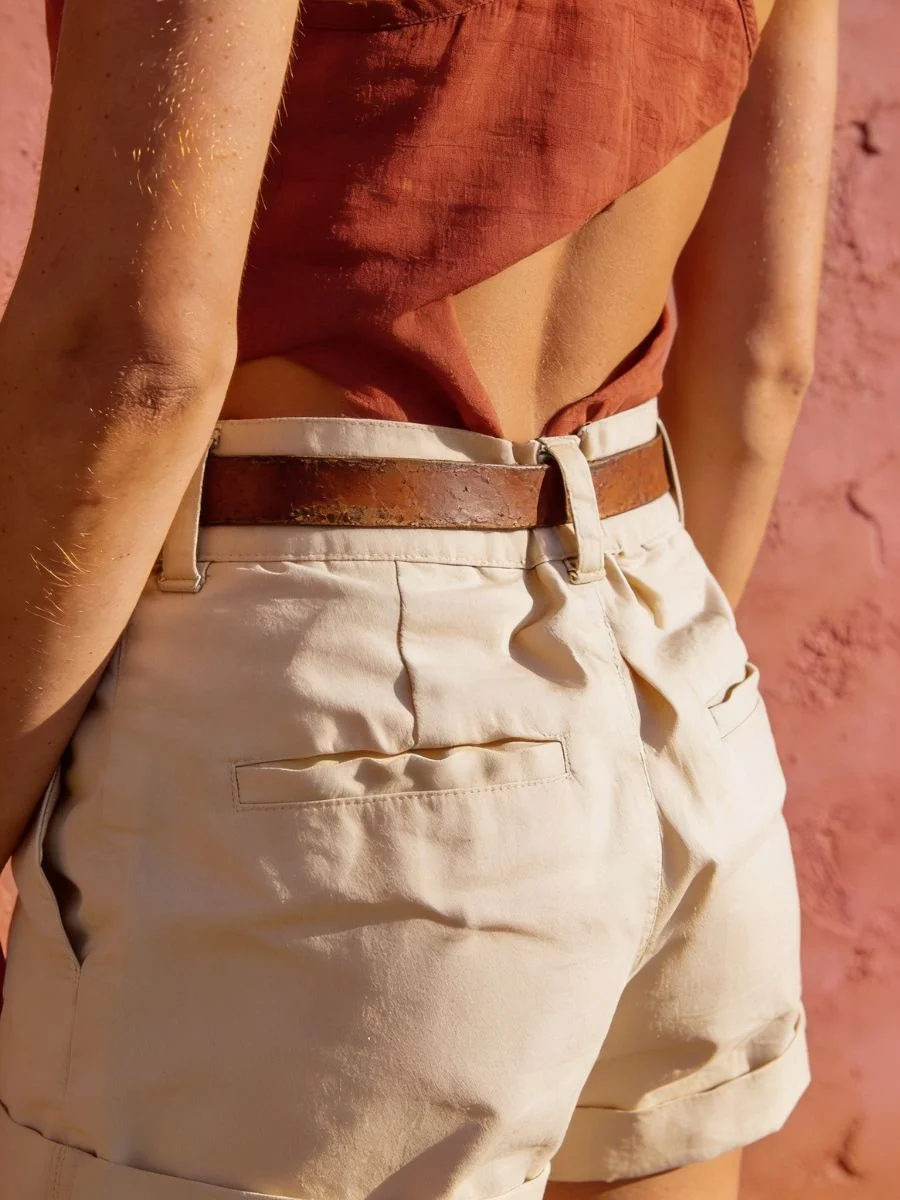
As the style breakdown above illustrates, the result of forcing a loose waist is completely chaotic and unpolished.
The heavy fabric bunches up unevenly, creating awkward horizontal folds and pushing out a bulky ridge right against the lower spine.
This distortion destroys the smooth, flat lines of an elegant outfit and makes expensive textiles look cheap and warped.
Even worse, that messy cluster of fabric actively creates friction against the skin during movement, causing the waistband to dig in uncomfortably.
Accessories should only ever be used as a sophisticated finishing touch to connect an outfit, never as a structural tool to fix bad manufacturing patterns.
True elegance means the garment stands completely on its own, hugging the silhouette perfectly before a single extra piece is secured.
The Belt vs. Tailoring Diagnostic
Mapping out the structural differences between forcing a fit and buying a pre-shaped garment highlights the styling trap.
This comparison shows exactly why accessories can never replace proper design lines.
| Styling Approach | Fabric Tension Profile | Silhouette Result |
| Cinching a Belt | Forced horizontal compression | Messy bunching and bulky folds |
| Contour Tailoring | Natural geometric shaping | Smooth, flat, and flush line |
Professional Secrets for Accessory Logic
An excellent habit is evaluating how a waistband sits naturally without any help from an accessories archive.
This simple mindset shift helps avoid buying bulky, frustrating pieces that alter your posture and ruin your outfit lines.
The Tension Test: Secure the shorts without a belt and take a deep breath. If the back panel pulls away from the spine by more than half an inch, a belt will only crumple the fabric. Look for a contour-cut waist instead.
How to Spot Structural Seams in Catalog Photos
Flipping straight to the rear-angle view of an online product listing is the fastest way for you to evaluate construction quality before purchasing.
Separating high-end tailoring from lazy, budget mass-production does not require you to have a fashion design background, and it will save you from endless fitting room frustration.
The trick is simply training your eyes to scan the fabric below the waistband for structural lines. While every pair of shorts features a single vertical seam running down the exact center of the lower back, premium garments go a step further.
Look closely at either side of that center anchor line for additional, smaller vertical stitched pinches. In the clothing industry, these crucial structural details are known as rear waist darts.
Cheap fast-fashion brands completely skip these extra side lines because omitting them saves time, lowers labor costs, and uses less fabric in the factory.
Without these twin stitched pinches framing the center seam, the back of the shorts remains a stiff, flat wall of fabric that simply cannot follow your shape.
(I used to skim right past these back seams until I realized that those tiny stitched lines are the absolute holy grail of a flush waistline.)
The difference becomes immediately clear when you look at how premium, high-density fabrics handle structural depth.
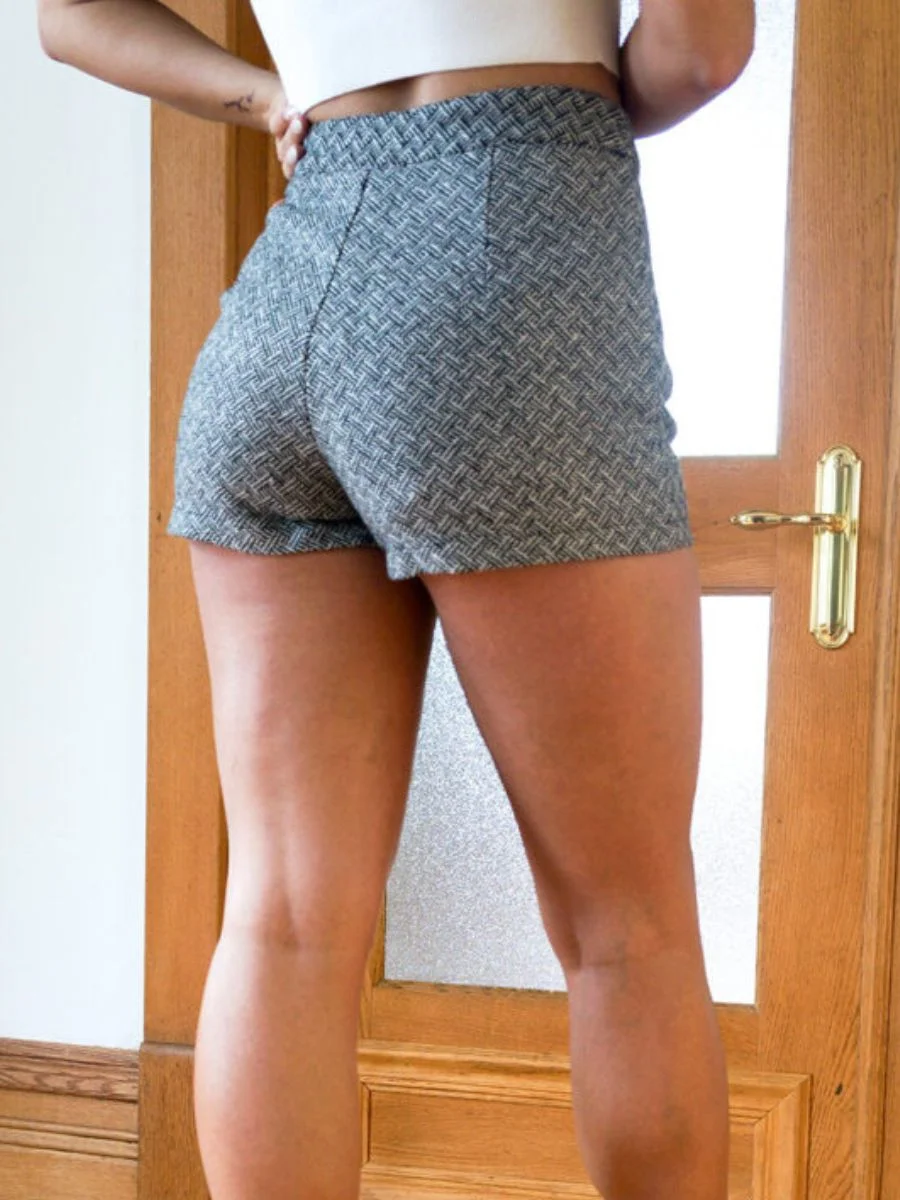
As you can clearly see in the lookbook example above, a rear waist dart is a highly deliberate, vertical triangular fold of fabric that is pinched and stitched down securely.
By sewing this clean line into the rear panel of the gorgeous Black and White Textured Tweed Shorts from Mint Fashion, the designer physically removes the excess, loose fabric right above your hip shelf.
This structural manipulation forces the top edge of the waistband to roll inward naturally, keeping it perfectly flat against your skin.
Scanning for these clean vertical seams while you browse your favorite online boutiques is the ultimate shopping shortcut for your wardrobe.
It eliminates the guesswork of whether an item will fit, ensuring you curate a collection built entirely on pieces that stay secure without you needing an uncomfortable belt.
The Rear Panel Quality Diagnostic
Mapping out the rear construction markers helps prevent you from wasting money on poorly built clothes.
This simple breakdown shows you exactly what back seams reveal about garment quality before you ever reach the checkout screen.
| Rear Seam Marker | Manufacturing Standard | Final Fit Reality |
|---|---|---|
| Missing Darts | Fast-fashion budget cut | Fabric gapping and bridging across your spine |
| Tailored Rear Dart | Premium boutique design | Fabric contours smoothly right along your shape |
Professional Secrets for Catalog Scanning
Zooming in closely on the fabric weave right under the back waistband loops is highly recommended during your quick product reviews.
This habit helps you immediately reveal whether a brand spent time engineering the garment or simply rushed it through an assembly line.
The Shadow Scan: Look closely at the catalog lighting on the back of the shorts. If the fabric is perfectly flat with zero vertical seam shadows below the waist, it lacks darts. Walk away; that piece will always gap on you.
Front Bulk vs. Hidden Side Zippers
When checking how a garment wraps around the hips, the front closure plays a surprisingly massive role in shaping the back of the waistband.
Many standard high-rise styles rely on heavy metal front button tracks and stiff zipper flies right across the midsection.
While this hardware is incredibly common, it acts like a rigid rod that pushes awkwardly outward whenever you sit or bend down.
The resulting forward pressure physically forces the back of the waistband to pull away from your spine, creating that annoying pocket of air.
To maintain a completely smooth, streamlined line, I always look for pieces that move the hardware away from the center of the abdomen entirely.
Shifting the closure systems to a flat front panel or a clean side zipper completely changes how the fabric handles your movements.
This smart tailoring approach ensures the front stays flat and calm, allowing the back panels to remain beautifully flush against your skin.
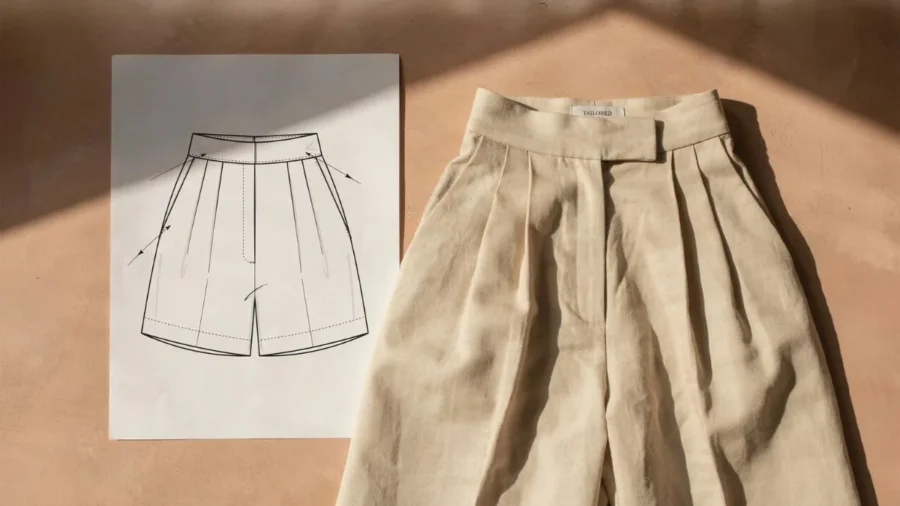
You can easily spot this difference by looking at how a flat-front layout handles everyday wear.
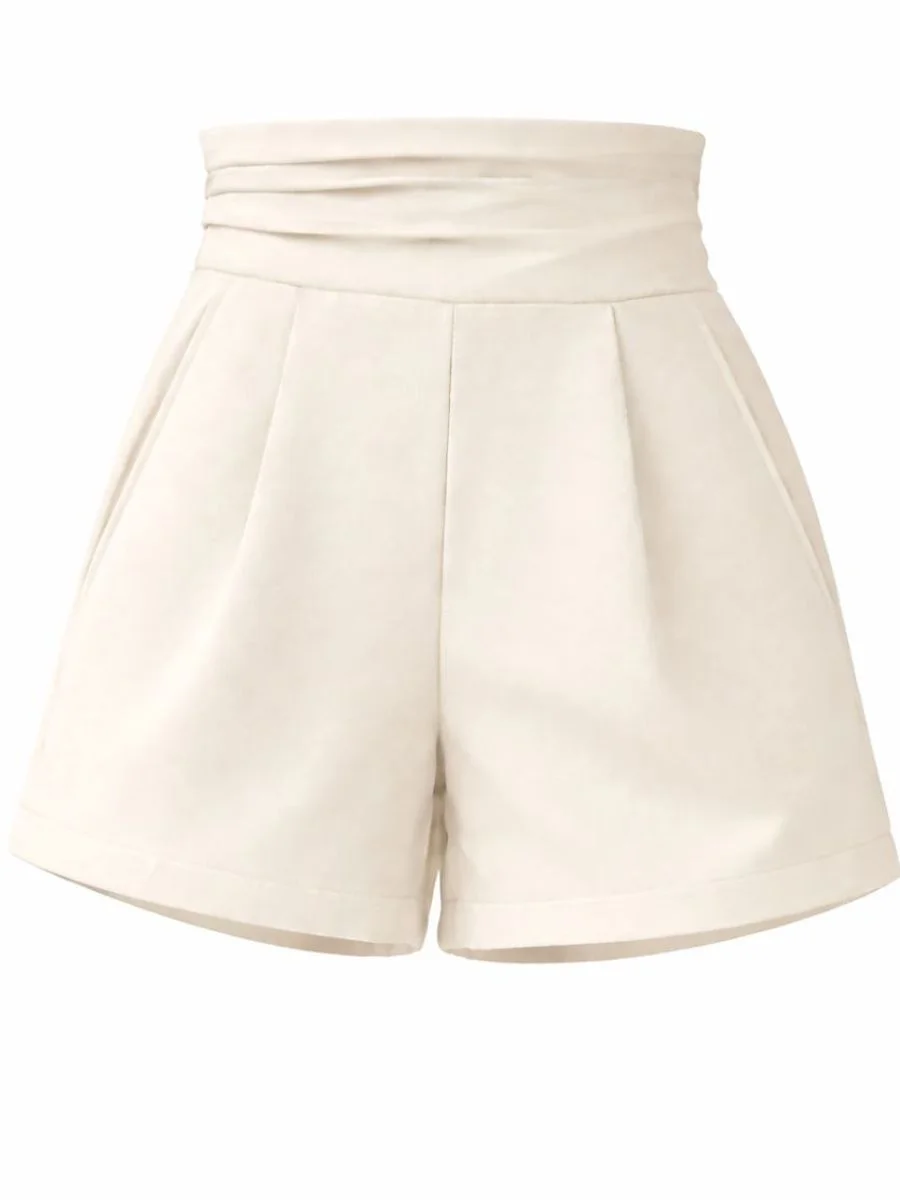
As the studio layout above demonstrates, high-end design focuses on keeping the front panels completely calm and anchored.
The sharp vertical creases give the legs structural alignment, ensuring the fabric sweeps down beautifully without dragging the waist out of line.
This balanced layout keeps the top band firmly in place, minimizing the harsh pulling that causes clothes to bridge across your lower back.
However, you can take this sleek approach a step further by seeking out styles that abandon visible front buttons altogether.
For a truly elevated look, an asymmetrical or overlapping waistband design removes all bulky focal points from your midsection.
Personally, a clean overlapping band is much more appealing because it spreads fabric tension evenly across the pelvis, creating a flawless line that looks incredibly expensive.
This brings us straight into our specialized closure diagnostic comparison.
Front Closure System Diagnostics
Choosing the right front layout makes it easy to keep your casual and formal summer pieces perfectly streamlined.
A simple guide breaks down how front closure designs dictate the final fit around your lower back.
| Closure Style | Structural Behavior | Silhouette Impact |
| Heavy Front Fly | Pushes outward during movement | Pulls the rear waistband away from the spine |
| Hidden Side Zipper | Stays flush along the hip curve | Keeps the waist anchored with zero gaping |
| Overlapping Panel | Distributes fabric tension evenly | Creates a flat, smooth, and luxury profile |
Professional Secrets for Front Panel Sophistication
Testing the behavior of a front closure before committing to a purchase ensures your outfit lines remain crisp all day long.
An easy diagnostic check helps you identify low-quality hardware setups that add unwanted midsection volume.
The Sitting Test: Button the shorts and sit down in front of a mirror. If the center fly fabric buttons pucker outward like a stiff loop, the rigid pressure will cause the back waist panel to gap. Hunt for hidden side closures or flat overlapping bands instead.
The Three Elegant Outfit Formulas
Building an elegant summer wardrobe relies heavily on working with the natural lines of your clothes.
Specific styling combinations celebrate proper garment construction while keeping you entirely comfortable in warm weather.
These formulas ensure your midsection stays flat and your waistband remains perfectly anchored all day long.
Recreating these sophisticated vacation looks is incredibly simple using a few high-quality wardrobe essentials.
The first combination relies on a single, vibrant tone to trick the eye.
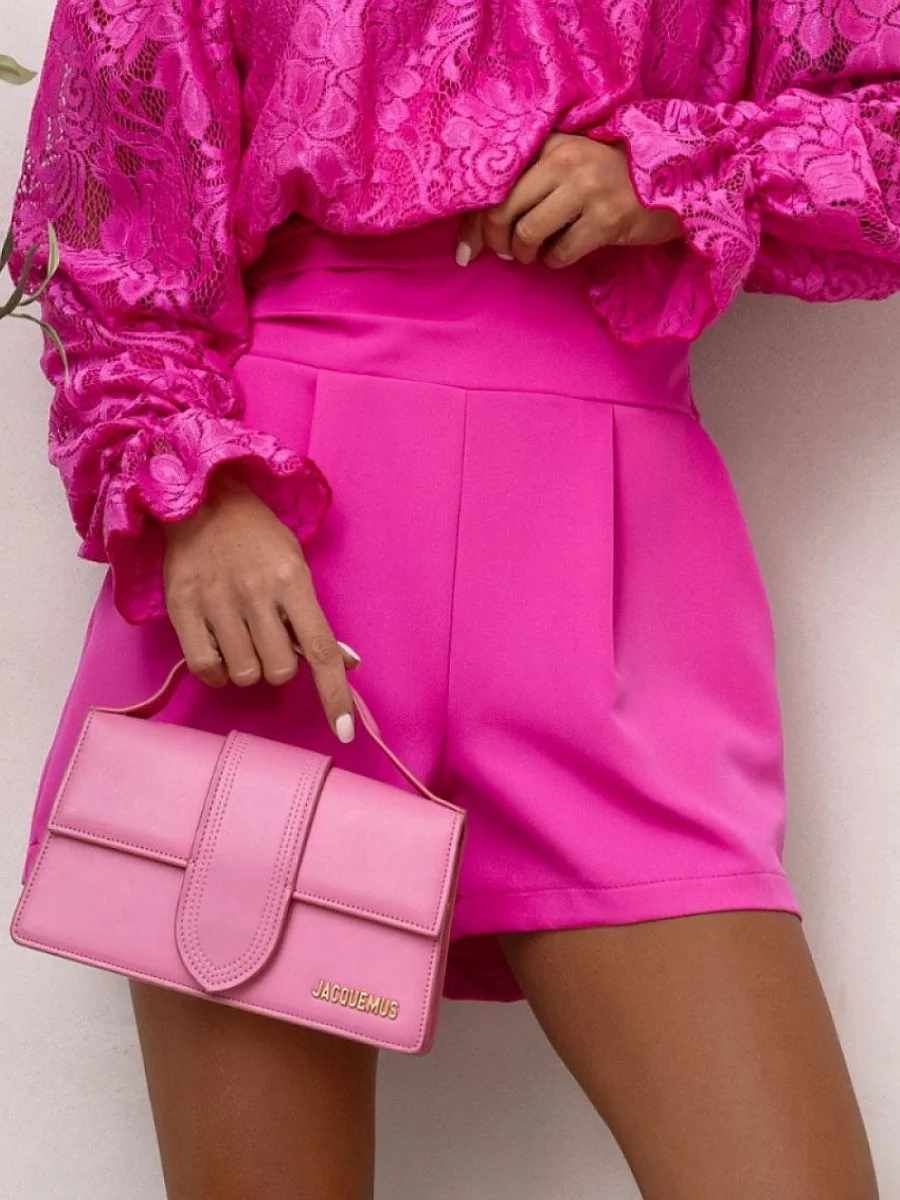
Styling the Vibrant Fuchsia Tailored Shorts with a matching pink blouse creates a continuous vertical line.
This smart color trick naturally draws the gaze upward, making you look instantly taller and sleeker on a warm afternoon.
Because the hues blend seamlessly at the waist, any minor fabric movements disappear completely into the outfit.
To prevent a broken silhouette from head to toe, anchor this bold monochrome column with a pair of matching non-slip summer shoes built with genuine leather linings that keep your walk completely graceful in the high heat.
A separate styling approach introduces a structured, sleeveless top layer to eliminate fitting friction entirely.
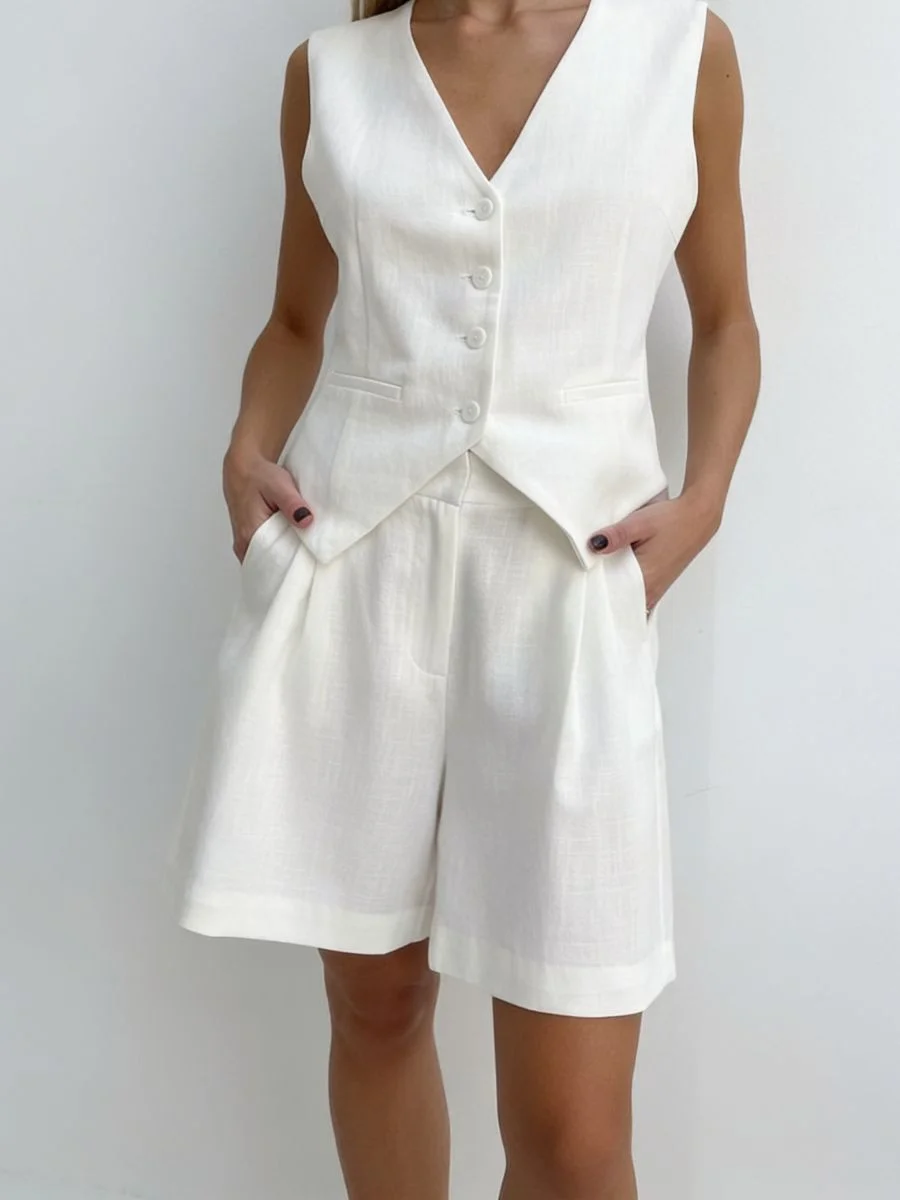
Pairing a crisp All-White Tailored Linen Suit Vest from Voghion with its matching pleated shorts removes the need to tuck in bulky fabric.
The pointed front hem of the vest drops softly over the waistband, keeping your midsection perfectly flat.
(I started wearing cropped tailored vests last summer, and it completely saved me from the annoying bunching that standard shirts cause.)
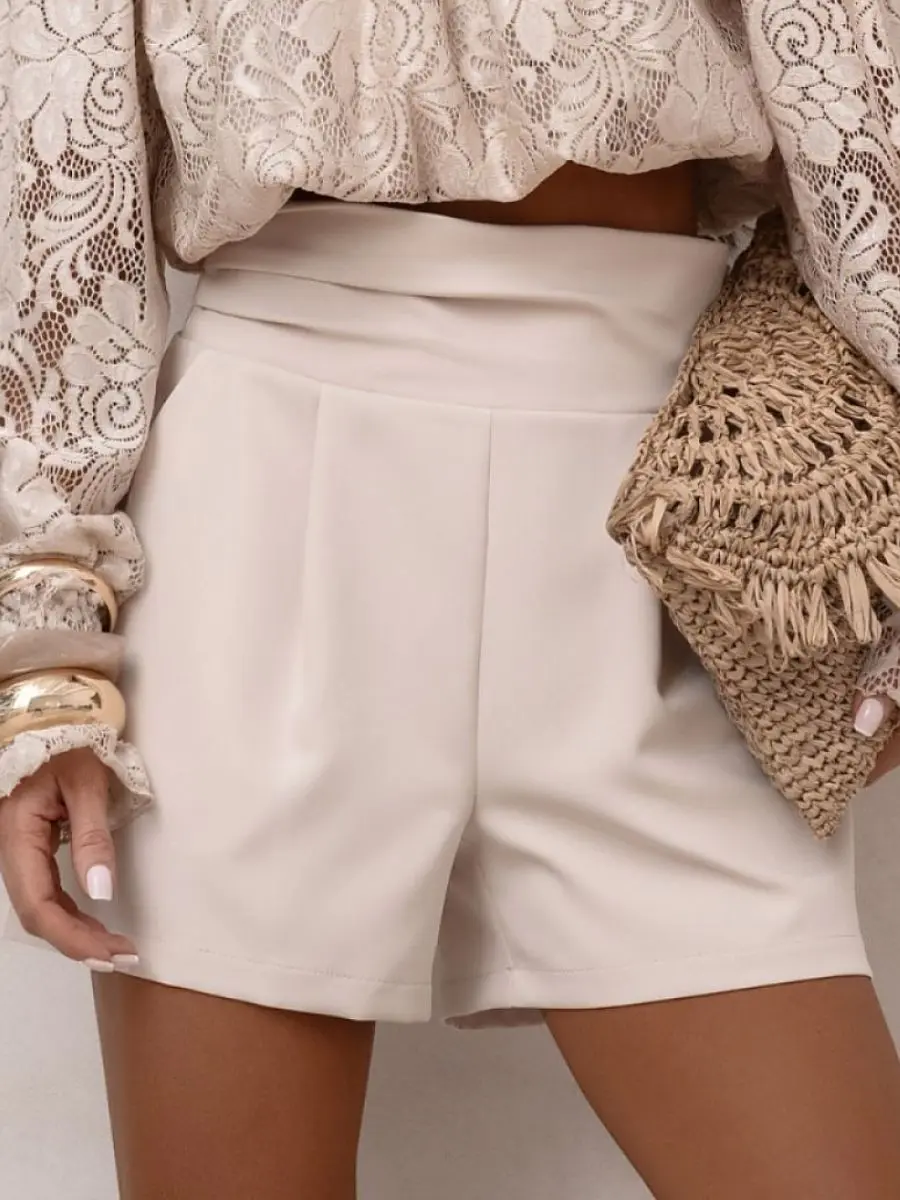
An alternative styling option relies on shifting fabric engineering toward specialized, hardware-free waist bands.
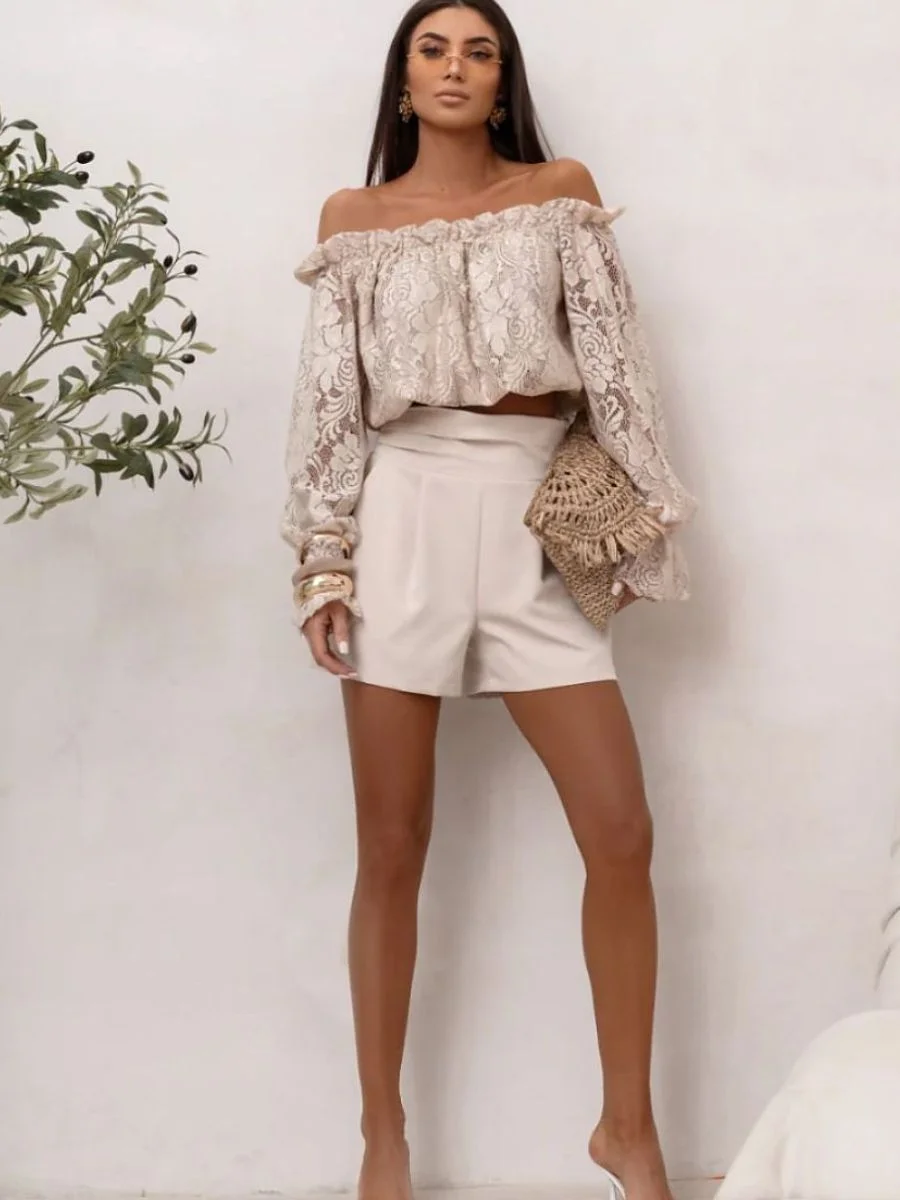
Swapping a basic front fly for a highly specific overlapping enclosure naturally balances out pelvic tension.
By utilizing the sleek lines of the exact same Cream Tailored Shorts that we looked at earlier in the front profile section, you keep the front flat when walking.
This clever design trick ensures the back panel stays anchored, completely removing the need for a belt.
The Three Elegant Outfit Formulas
Choosing the right combination of layers makes it simple to maintain clean garment lines throughout the day.
This straightforward guide pairs each styling approach with its primary structural benefit to help you plan your travel wardrobe.
| Outfit Formula | Styling Combination | Core Fit Benefit |
| The Color Column | Matching bold top and bottom | Blends the waist transition seamlessly |
| The Vest Shield | Structured vest over waistband | Eliminates tucked-in fabric bulk entirely |
| The Rigid Anchor | Dense woven fabrics like tweed | Holds shape dynamically without sagging |
Your Elegant Shopping Checklist
- Waistband Profile: Hunt for curved, crescent-shaped arc bands that tilt inward naturally.
- Rear Seams: Verify the presence of clean, vertical stitched rear waist darts framing the center back seam.
- Front Architecture: Settle for flat overlapping panels or hidden side zippers over heavy button flies.
- Fabric Matrix: Prioritize dense, zero-stretch woven textiles like structured cotton canvas, heavy linen blends, or thick tweed.
Final Thoughts: The True Definition of Tailoring Luxury
Finding a pair of summer shorts that sit completely flat against your lower back shouldn’t feel like a shopping miracle.
Once you know how to look for curved waistbands, hidden side closures, and vertical rear darts, you can easily filter out cheap manufacturing flaws.
(Honestly, taking an extra moment to scan the construction lines completely saves you from the frustration of bulky belts and loose clothing panels.)
Investing in well-made pieces allows you to step out into any warm summer afternoon with absolute comfort and complete confidence.
With elegance,
Bella
